Following an early career in real estate and residential development, Andrea retrained at KLC School of Design and co-founded a studio with a friend, which they ran for more than a decade.
As part of our ‘March Meets’ series of interviews with inspiring founders and business leaders, Andrea told us about her unconventional route to the world of interior design, the administrative challenges of running a busy studio, and her advice for designing a residential space.
What was your background prior to joining London Design Group and how has your role there evolved?
I have worked in real estate in one form or another throughout my entire career. I started out as a chartered surveyor at a global real estate company, focusing on commercial investment properties and development sites. By chance, I was offered the opportunity to join their newly established residential team and I jumped at it. It felt like the perfect way to broaden my horizons.
From there, I moved into the world of residential development, where I had the chance to collaborate with some incredibly talented interior designers, including Martin Brudnizki. It was during this time that I got to see how luxury schemes come together, and I became fascinated by the sheer creativity and possibility within interior design.

That curiosity led me to take a two-year course at KLC School of Design. Soon after, I co-founded a boutique interior design studio with my long-time friend and business partner, Alison, which we ran together for 12 years.
I joined London Design Group nearly two years ago as a director. We’re a small, hands-on team of eight, which means I wear quite a few hats – from business development and interior design to acting as a client liaison for both private and developer clients. I love the variety and pace of the work as no two days are ever the same.

What are some of the biggest challenges you've faced in the world of work, and how did you overcome them?
In the world of interior design, where there are so many moving parts and tight timelines, things don’t always go to plan. Whether it’s a supplier missing a deadline or someone simply not turning up when they should, there’s always a risk of something going awry.
With experience, you start to anticipate where potential issues might arise. You learn what questions to ask, especially when commissioning bespoke pieces, and you build in more time than you think you’ll need, just in case. One of the most valuable lessons I’ve learnt is to under-promise and over-deliver wherever possible.
A good example of this was a project for an overseas client whose apartment was on the top floor of a beautiful red-brick period building, without a lift and with a very narrow staircase. We had everything meticulously planned, including a hoist to get the furniture in through the window. Then, the day before installation, we got a call from the supplier of a bespoke dining table saying they couldn’t deliver on time due to a scheduling issue on their end.

Rather than let the client down, we quickly arranged a last-minute collection from the workshop using one of our trusted delivery partners. Thanks to those relationships and a bit of logistical juggling, we managed to get everything in place on time. It was definitely a challenge, but it reinforced the importance of thinking on your feet and having a solid network you can rely on.
What advice would you give to someone starting out in interior design?
For anyone starting out in interior design, my advice would be to first build a solid foundation in the basics – understanding space, proportion, colour, and materials is key. But equally important are communication and presentation skills. You need to be able to clearly articulate your ideas to clients, suppliers, and contractors.
There’s a common saying in the industry that interior design is 10% creativity and 90% admin and there’s a lot of truth in that. Being highly organised is essential. You will need to stay on top of schedules, chase orders, manage budgets, and keep a clear paper trail of every detail. Those behind-the-scenes tasks are what keep a project running smoothly.
"There’s a common saying in the industry that interior design is 10% creativity and 90% admin and there’s a lot of truth in that."
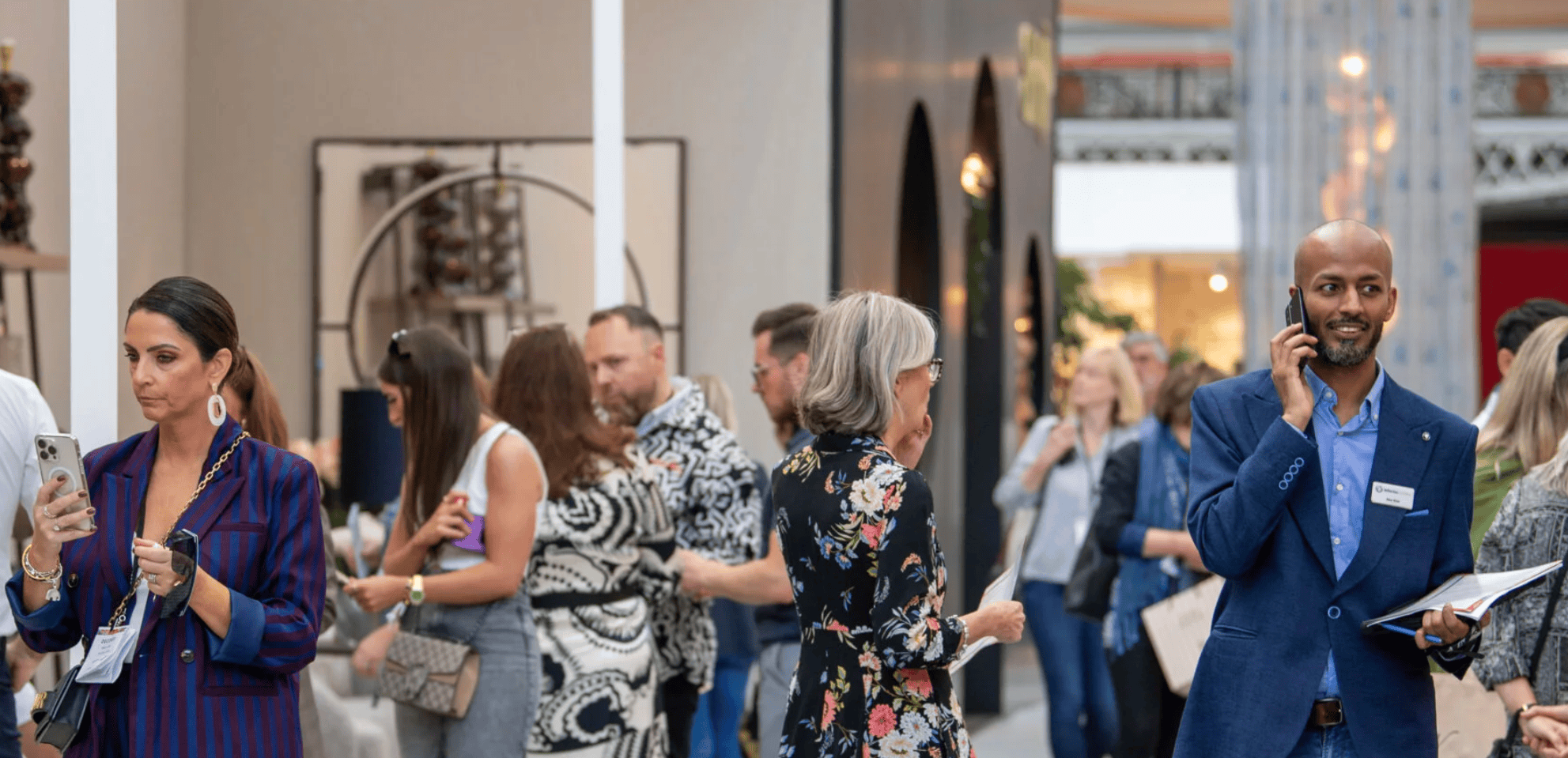
I’d also recommend attending as many trade shows as you can. They are a great source of inspiration and help you stay aware of trends, though it is important not to be a slave to them. Instead, develop your own style and point of view. Look at other designers’ work, of course, but also pay attention to the world around you – art, travel, architecture, fashion, anything can spark a new idea. Ask yourself why you’re drawn to certain colours, shapes, or textures. That self-awareness helps you develop your own creative voice.

Also, understand the difference between designing for different audiences. A show apartment needs broad appeal, while a private home should reflect the personality and lifestyle of the individual client. Don’t be afraid to ask questions, and don’t be disheartened if your first proposal doesn’t hit the mark. It often takes a few rounds of refinement to get to the perfect scheme and that’s all part of the process.
What is your top tip for designing a residential space?
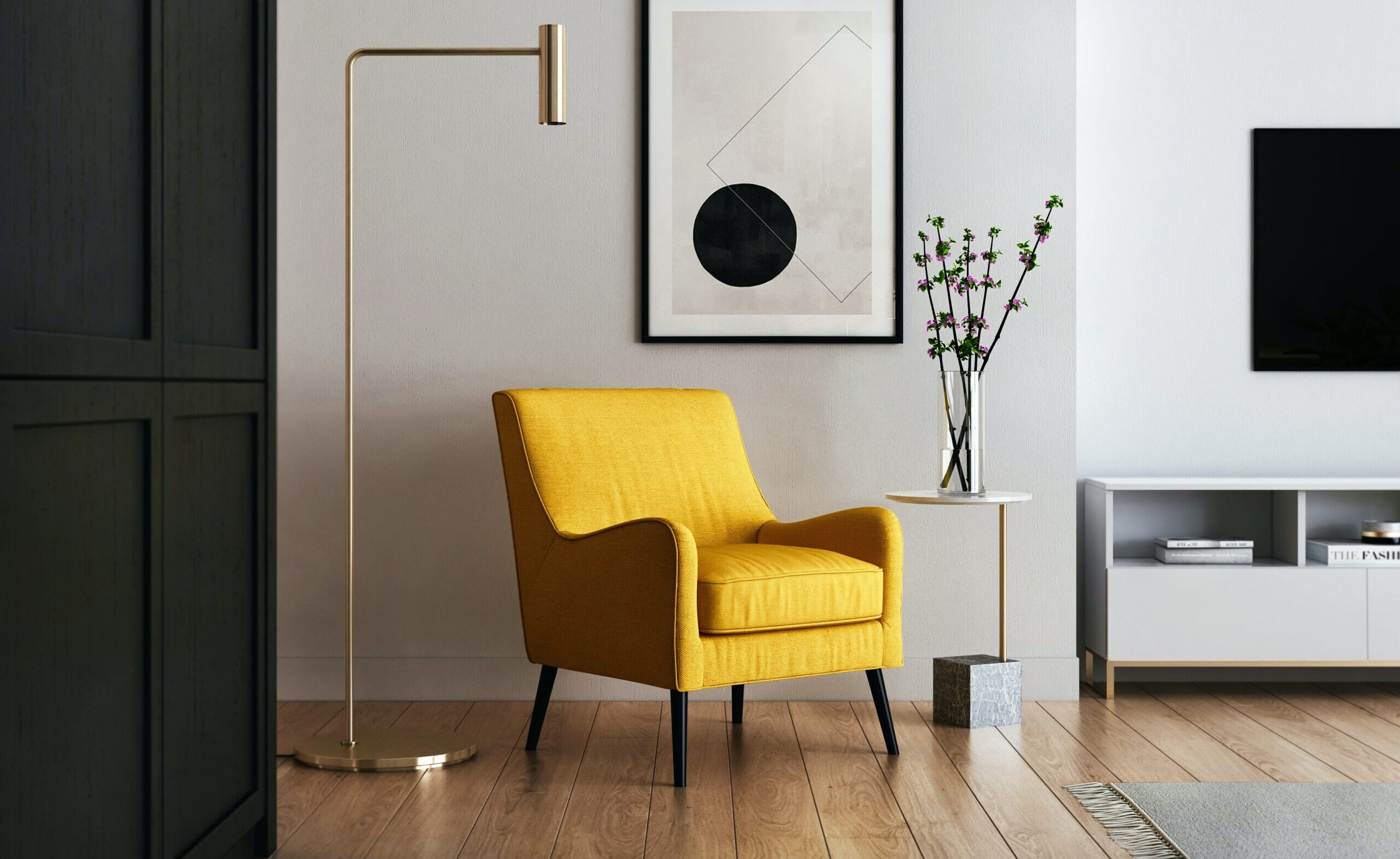
We are often asked to either transform a new-build apartment into a showpiece or breathe new life into a tired home. While the approach differs slightly for each, my starting point is always the same: embrace the potential of the space and imagine what’s possible. Every wall, corner, or awkward nook presents an opportunity to add interest or functionality.
From there, I focus on the atmosphere we want to create, guided by the client’s brief whether it is calm and serene, warm and welcoming or bold and energetic. Understanding the mood or emotion a space should evoke helps shape a clear, creative vision and having that vision from the start ensures that the final design feels cohesive and considered.

"Every wall, corner, or awkward nook presents an opportunity to add interest or functionality."
Next, I look at the essential furniture pieces and how the space will flow, both in terms of layout and how it is used throughout the day, so I spend a lot of time reviewing different layouts and scenarios. Having a scaled floor plan in CAD is incredibly helpful, as is using AI-powered tools to quickly mock up initial schemes, experiment with materials or colours, and refine the design. It is a great way to test ideas and make changes before finalising anything.
Lighting is another key element. You want layers of light – ceiling, wall and table, ideally on separate circuits so they can be adjusted depending on the time of day or mood. Finally, never underestimate the power of accessories. They’re what bring the scheme to life, adding personality and warmth that make a space feel like home

What is your proudest professional achievement at LDG?
One of the things I am most proud of since joining LDG is stepping into a more outward-facing role, particularly taking on our marketing and brand communications, which was quite new territory for me.
"It has been hugely rewarding to see how our voice and presence have grown."
I have always been more naturally reserved and not someone who instinctively wants to shout about achievements, so things like posting regularly on social media definitely pushed me out of my comfort zone. It is still a work in progress, but it has been hugely rewarding to see how our voice and presence have grown.

Alongside that, I have also had the opportunity to lead some exciting interior design projects and build relationships with valued clients, which is always incredibly fulfilling. But a real highlight has been leading the rebranding of LDG and launching our new website in collaboration with March Branding.

It was a true team effort and a chance to really define who we are and how we want to present ourselves. The feedback has been so positive, and it is lovely to hear how well the new brand and site have been received, both by clients and industry peers. It has been a big milestone for the business, and I am proud to have played a part in it.